OSHA Job Site Toilet Rules for Texas Contractors
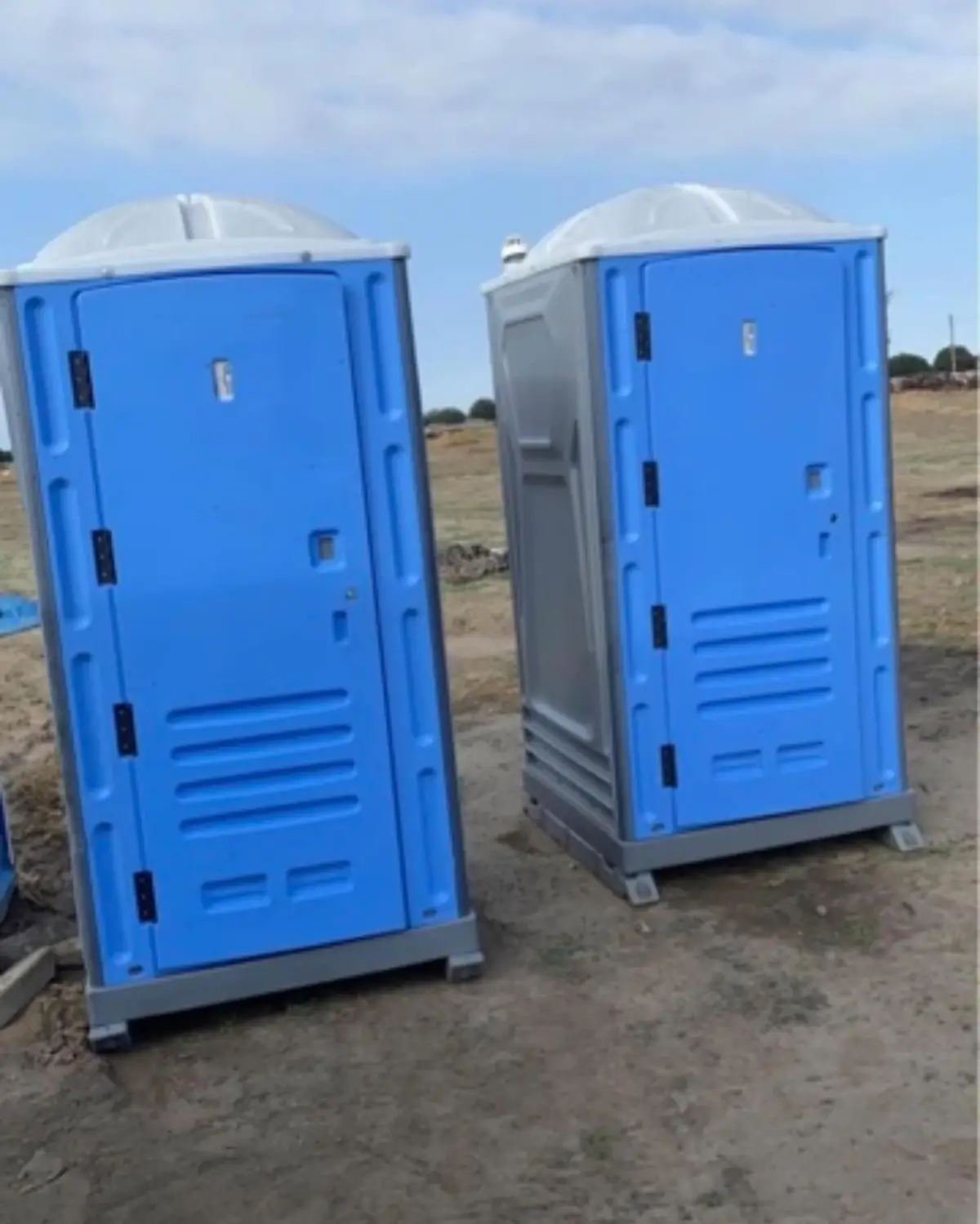
Construction site toilet rules in Texas come from federal OSHA. Texas has no state plan for private job sites, and the key rule is 29 CFR 1926.51. This guide explains its toilet table with real crew sizes.
This is plain-English help, not legal advice. Confirm details with OSHA or your safety advisor.
What does OSHA 1926.51 require for job site toilets?
OSHA 1926.51(c) requires toilets on construction sites based on crew size in Table D-1. A crew of 20 or fewer needs at least 1 toilet. A crew of 20 or more needs 1 toilet seat and 1 urinal per 40 workers. At 200 or more workers, the ratio becomes 1 seat and 1 urinal per 50.
| Number of employees | Minimum facilities (OSHA Table D-1) |
|---|---|
| 20 or fewer | 1 toilet |
| 20 or more | 1 toilet seat and 1 urinal per 40 workers |
| 200 or more | 1 toilet seat and 1 urinal per 50 workers |
The full text sits on the OSHA 1926.51 sanitation standard. One exception matters for road and utility work. Section 1926.51(c)(4) excuses mobile crews that have a vehicle ready to reach nearby toilets.
How do you work out the toilet count for your crew size?
For crews of 20 or more, divide peak crew size by 40 and round up. That gives the OSHA minimum. A 35-person crew needs 1 seat and 1 urinal by law. Our planning number is 1 unit per 10 workers per 40-hour week, so that crew gets 4 units.
A standard unit has 1 seat and 1 urinal inside. So in this math, 1 unit covers 1 seat and 1 urinal. Count every worker on site at peak, including subs.
| Peak crew | OSHA minimum | Our planning number (weekly service) |
|---|---|---|
| 8 workers | 1 toilet | 1 unit |
| 18 workers | 1 toilet | 2 units |
| 35 workers | 1 seat + 1 urinal | 4 units |
| 60 workers | 2 seats + 2 urinals | 6 units |
| 120 workers | 3 seats + 3 urinals | 12 units |
| 240 workers | 5 seats + 5 urinals | 24 units |
Why the gap? The OSHA table is a legal floor, while our number tracks how fast a tank fills between weekly visits. For 50-hour weeks, scale up or add a service visit.
When does OSHA require handwashing on a job site?
OSHA 1926.51(f) requires washing facilities near the work for some tasks. These include applying paint, coatings, herbicides or insecticides, or handling other harmful contaminants. The facilities must be kept sanitary. A simple way to plan is 1 hand wash station beside each cluster of toilets on those sites.
Concrete, drywall mud and sealants all leave residue that hand sanitizer will not remove. Even when the rule does not strictly apply, crews eat lunch on site. Running water and soap cut down on sick days.
Add a portable hand wash station next to the toilets. Ask to have the station refilled on each service visit.
Where should toilets go on a construction site?
Job site toilets belong on level ground, a short walk from the work. Keep them within about 15 feet of where a service truck can park. The 15-foot reach of the hose decides whether a visit happens. A blocked unit can miss its weekly service, and the crew lives with the result.
- Keep units out of crane swing zones, fire lanes and material drop areas.
- Set them on gravel or a pad. Blackland Prairie clay gets slick after rain.
- Stake or strap units in spring storm season, when straight-line winds hit DFW.
- Check that each door latches and locks from the inside for privacy.
- Call before a phase change so we can move units with the work.
Mesquite residential construction hours run 7 AM to 6 PM. Our delivery window runs the same hours. See our construction porta potty rental page for site setup details.
How often should job site toilets be serviced in Texas heat?
Weekly service is standard on our 28-day construction rentals. From June through September, busy sites often add a second weekly visit. The DFW normal July high is 95.6°F, and heat speeds up odor in every tank. Each extra service visit costs $65–$95 per unit.
A standard 28-day rental runs $199–$285 with weekly service. The first cycle adds $45–$95 for delivery and pickup, and renewals run $185–$245 per 28 days. Compare that with long-term rental options if the job runs for months.
What do inspectors look for at job site toilets?
A practical self-check covers 4 things an inspector can see. Check the count against Table D-1, sanitary condition, privacy, and handwashing where 1926.51(f) applies. Keep dated service records for each unit. An invoice or service tag shows the toilets are cleaned on a set schedule.
Every 28-day job site rental includes one service visit per week on the same weekday. Big crews and summer heat often need a second visit.
- Count.Match units to your peak headcount this week, not last month.
- Stock.Check toilet paper and sanitizer every morning.
- Latch.Test each door lock and fix or report broken ones.
- Upright.Look for tipped or tilted units after storms.
- Records.File the service invoices where the super can find them.
Bottom line: OSHA sets the minimum, and crew comfort sets the real number. Call (361) 213-6286 with your crew size and start date, and we will size the units and service plan.
Planning something in or near Mesquite?
Call (361) 213-6286 for an itemized quote. Same-day delivery when you call by noon, Mon–Sat.
Questions readers ask
Does a crew of exactly 20 need a urinal?
Table D-1 lists 20 in both rows, so plan for 1 seat and 1 urinal. A standard unit has both, so 1 unit covers it.
Do road or utility crews need a toilet on site?
Section 1926.51(c)(4) excuses mobile crews with a vehicle ready to reach nearby toilets. Fixed sites still need units on site.
Can the toilets be locked overnight?
Yes, many sites lock units after hours. Unlock them before the crew arrives so workers always have access during the shift.
Do you service job sites on Saturdays?
Our office runs Monday through Saturday, 7 AM to 7 PM. Ask about a Saturday visit if your crew works weekends.
What does a 6-month job cost for 1 unit?
Plan on the first 28-day cycle at $199–$285 plus $45–$95 delivery and pickup, then $185–$245 for each later cycle.